
Reklama
Insights into obstetrics and gynecology journey: George Washington University, Endometriosis & Advanced Pelvic Surgery. Importance of robotic surgery for patients.

Spis treści
- How did your specialization in Endometriosis and Advanced Pelvic Surgery come about, and what motivates your focus in this area?
- What's the main problem actually, concerning endometriosis? The disease is not well known among patients or among doctors?
- What prompted the decision to conduct live surgical broadcasts in Poland, and what are the primary objectives of these sessions?
- In Poland robotic surgeries are quite interesting for doctors because nowadays they are doing mostly laparoscopic surgeries.
- How significant is the move from laparoscopy treatment to robotic surgery? How important is that for patients?
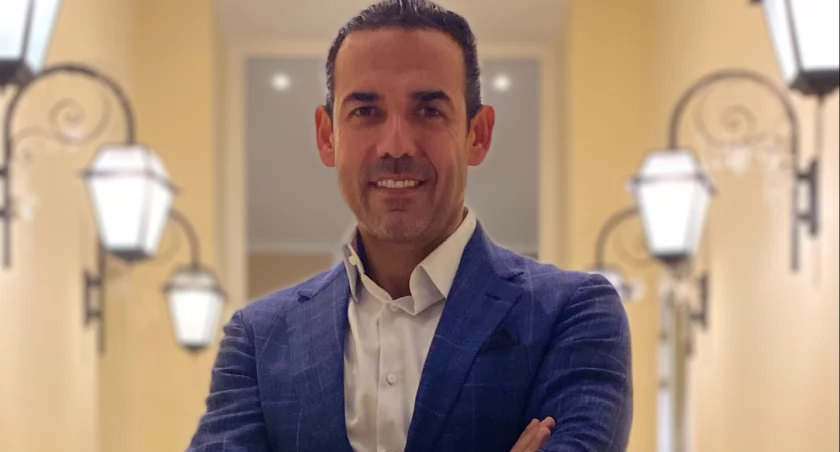
One in ten women are affected by endometriosis. There is a very poor understanding of this extremely common disease, moreover, there is a lack of research to better understand the disease. The delay in the diagnosis of the disease is, on average, 10 years for patients, and the surgery for endometriosis is one of the most challenging surgeries because it requires a high-level set of skills. Imagine then, that for one of the most common diseases that affects 10% of the female at birth population, basically a little more than 5% of the general population, there is exceedingly poor understanding of the disease and poor training of surgeons in order to treat these patients - read the interview with Gaby Moawad Clinical Associate Professor of Obstetrics and Gynecology The George Washington University School of Medicine and Health Sciences.
Can you share your insights into your journey in the field of Obstetrics and Gynecology, particularly your work at The George Washington University School of Medicine and Health Sciences?
I did my residency there after completing my medical school back in Lebanon in 2007. My residency at George Washington University was followed by a fellowship in minimally invasive surgery there in 2011. Minimally invasive surgery means minimal access, laparoscopy or robotic surgery.
Then I stayed in Washington on faculty where I was running the fellowship of minimally invasive surgery. I trained eight fellows during that time, and we developed a super strong minimally invasive gynecologic surgery department. We were 5 surgeons there, then after that, in 2020, I started my own practice that focuses on endometriosis and advanced pelvic surgery only. I have two offices, one in Washington DC and one in Miami. The center is called the Center for Endometriosis and Advanced Pelvic Surgery.
I don't do obstetrics. I don't deliver babies. I don't do any general ob/gyn. I'm just a gynecologic surgeon. I have published numerous articles about minimally invasive surgery and endometriosis.
Reklama
How did your specialization in Endometriosis and Advanced Pelvic Surgery come about, and what motivates your focus in this area?
One in ten women are affected by endometriosis. There is a very poor understanding of this extremely common disease, moreover, there is a lack of research to better understand the disease. The delay in the diagnosis of the disease is, on average, 10 years for patients, and the surgery for endometriosis is one of the most challenging surgeries because it requires a high-level set of skills. Imagine then, that for one of the most common diseases that affects 10% of the female at birth population, basically a little more than 5% of the general population, there is exceedingly poor understanding of the disease and poor training of surgeons in order to treat these patients.
In addition, one thing is very important. Endometriosis is a whole-body disease. So, the gynecologic surgeon all of a sudden is required to work on the bowel, the bladder, and the diaphragm. For exactly this reason, it requires a higher level of skills and a strong collaboration with other disciplines - colorectal surgeons, urologists, thoracic surgeons, in addition to radiologists, pelvic floor therapy, and pain medicine.
This is a whole ecosystem that requires a collaboration for us to provide the patients the best treatment and the better improvement of their quality of life.
Reklama
What's the main problem actually, concerning endometriosis? The disease is not well known among patients or among doctors?
Honestly, it's a cascade of things. There is huge stigma created around the period and the menstrual pain, because, for example, if you have a daughter that has pain during their period, and you had pain during your period, it's normalized now. So, the perception of what's normal versus what's abnormal, is lacking sometimes. On the other hand, the disease is diagnosed by taking an in-depth medical history from the patient, and listening to them. Unfortunately, the volume-based care model, where we need to see many more patients because of insurance pay schemes, or the need to go through 30 patients a day to be able to minimize the waiting list has driven doctors to have a lack of listening and a minimal time to spend with the patient, because they need to do more work and they don't have enough time to spend with patients. Another important aspect, the diagnosis is mainly clinical, but it is confirmed by radiology, which helps map the disease, and finally the disease is confirmed by surgery. Over and over again, if doctors are treating the result of an ultrasound or an MRI when it appears negative, they miss a lot of the superficial endometriosis that is poorly diagnosed by imaging. As well, radiologists do not have a very good understanding of doing imaging specifically for endometriosis, and that's why now we see a lot of OBGYNs either training to read their MRIs, or training to do ultrasounds, in order to diagnose and map the disease. When it comes to the surgery aspect, the fear of the complexity of the disease makes many surgeons reconsider medical treatment on those patients, to avoid taking them to what they think is risky surgeries where they don't have the proper skills to manage the disease. The education system is crumbling, in the sense that doctors go for four years of OBGYN, where they take care mostly, during the four years of residency, of pregnant patients and pregnancy related issues, and they don't have much time to focus on the advanced gynecology, such as endometriosis. Even though in gynecology fellowships, there is a broad spectrum to cover between office procedures, vaginal procedures, laparoscopic and robotic procedures, fibroid, endometriosis, and all the other spectrum of benign diseases that limit your specialization in one particular complex disease like endometriosis. When working at a high volume, minimally invasive surgery department, you don't have a lot of proportion of endometriosis unless you focus on the disease. Once you start focusing on the disease, you have a better ability to manage it.
Additionally, many times surgery requires a multidisciplinary approach, for example a collaboration with other surgeons, made harder when you want to find the right time where the three surgeons are in the OR on the same day and can coordinate the procedure. For this reason, creating teams help mitigate or at least helps minimize those issues.
What prompted the decision to conduct live surgical broadcasts in Poland, and what are the primary objectives of these sessions?
The objective is to try and highlight the way we have standardized endometriosis surgery, how we teach endometriosis surgery , to encourage inspired people to replicate what we have done in terms of multidisciplinary team management, and at the same time, elevate the surgical skills, specifically for endometriosis.
Reklama
In Poland robotic surgeries are quite interesting for doctors because nowadays they are doing mostly laparoscopic surgeries.
Laparoscopy is very important, however a surgeon might lack the precision due to challenging ergonomics or the possibility of finding the right assistant. Whereas with robotic surgery you already have both, you're controlling the camera and three other arms. One could say it’s like you're two surgeons in one. When you have a complex case you are in much better control. Robotic surgery simplifies the complexity of the case, plus it allows the surgeon to work in small spaces within the pelvis with high precision and better visualization, which makes management of endometriosis far more standardized and much less reliant on an assistant or another surgeon.
How significant is the move from laparoscopy treatment to robotic surgery? How important is that for patients?
When it comes to endometriosis, laparoscopy is a specialty in Poland that's been here for 25 to 30 years. If within the current status, laparoscopic surgery failed to provide different options for patients , in particular concerning endometriosis, robotic surgery is a technology that could be embraced, and that will advance and enable many more surgeons doing more complex surgeries to take care of more endometriosis patients. Laparoscopy has a steep learning curve, and now robotics has shortened that learning curve and enabled access for a lot of patients to the appropriate care. Personally, I believe we have an ethical obligation to adopt technology wisely that will enable us to serve our patients better.
To serve our patients better means what? Shorter recovery time?
This means, simply, to do minimally invasive surgeries, and being able to have more doctors at a high skill level. Additionally, for example, if we find a good surgeon, their lifespan of surgery doing complex laparoscopic surgery is shorter because the ergonomics are hard , they're standing for long hours. They cannot perform on the same level when they're 60 years old, in comparison to when they're 30 or 40 years old. With robotic surgeries, you have better ergonomics and less cognitive stress on the surgeons, enabling them to lengthen the surgeon’s career so they can serve more patients.
Reklama
Right. One of the topics of tomorrow's event is creating an endometriosis surgery center in Poland. What are the key steps that are essential in establishing such a center?
There are multiple things to consider. First, we need to identify the volume of endometriosis in the country to see how many centers should be available. Second, endometriosis needs to be stratified into simpler categories, because the centers cannot take care of every patient with endometriosis. There could be, for example, 100 centers in total, but you need to have centers of excellence. Everybody should be trained to do the minimally invasive cases and refer the most advanced cases to those centers of excellence. These are centers where they can provide a higher quality and more advanced surgical care for those patients. Those centers need to have teams that are dedicated to the treatment, diagnosis and management of endometriosis. Therefore, these teams need to have multiple surgeons of various specializations, such as colorectal surgeons, urologists, thoracic surgeons, multiple personnel such as nurse practitioners that understand more about endometriosis, pelvic floor therapy and pain management. Such centers need to be able to have all these specialties, together in one place, to be able to have successful multidisciplinary surgeries. Finally, those centers should have surgeon champions who will educate and train the younger surgeons to do endometriosis surgeries.
How do you foresee the insights shared during these events impacting the practices of Polish gynecologists?
For me the goal is not for everybody to be clapping bravo, but rather to initiate a conversation. I'm sure every polish surgeon is highly skilled and advanced for the point they reach in their career, and that they very intelligent and competitive people. When it comes to this discussion, the surgeons are typically distributed on a curve. You have the pioneers, the early followers, and then you have the late followers, and there will undoubtedly a proportion of people that will never be convinced about what the others are doing. The goal is always to initiate the conversation, try to inspire people, try to create change with people who are motivated and then try to collaborate, always with patients’ advocacy groups, to create an honest conversation and restore the trust that patients have lost in their physicians. I'm sure that tomorrow most of the surgeons are going to be on that curve, some of them are going to be very excited about the idea, others will need to think about it, and this will be an eye opener for them. Then there will always be the proportion of the non-believers saying, “I do things best myself.”
Are there any plans for continued collaboration or knowledge exchange between international medical institutions and Poland in the field of gynecological surgery? Do you see opportunities for ongoing education and training programs for Polish medical professionals based on these experiences?
I am working in the US around two to three weeks a month and I dedicate one to two weeks a month for conferences, teaching and training. This is one of the things that drives me in a sense, trying to create an impact that is far beyond me treating patients with endometriosis, because I only can treat a certain number of patients. However, If I can inspire a lot of doctors to treat their patients better, my impact will be far bigger than if I do it by myself.
This is the most important idea - as doctors, we have the ethical obligation to provide the highest quality of care for our patients, at times this is a complex issue because we need to embrace technology to help us. We cannot always throw stones at newer technology simply because we don't use it ourselves. We must have an open mind to looking at every new global technology and try to make it safe for our patients and utilize it to the best of our ability to serve our patients. That should be the goal of every physician. I know there are a lot of great technologies, which I personally don't use, but I welcome them and refer patients to other physicians who do utilize them, because we have to understand that we cannot be good at everything.
Obserwuj nas na  Google News
Chcesz być na bieżąco z wieściami z naszego portalu? Obserwuj nas na Google News!
Źródło:
https://gabymoawad.com/
https://smhs.gwu.edu/

Reklama
Komentarze opinie
Podziel się swoją opinią
Twoje zdanie jest ważne jednak nie może ranić innych osób lub grup.





Reklama
Reklama




Reklama
Reklama
Reklama
Najnowsze wiadomości
- 18/07 Jak zasnąć w upalne noce? Fizjolog wyjaśnia, dlaczego lodowaty prysznic to błąd
- 18/07 Nie tylko olej z czarnuszki. Naukowcy z Lublina opatentowali proszek bogaty w białko i błonnik
- 18/07 Telemedycyna dla seniorów: co oferuje NFZ?
- 18/07 Wyrabiamy kartę EKUZ bez wychodzenia z domu. Zajmuje to tylko kilka minut
- 18/07 AOTMiT o otyłości. Kompleksowa opieka bariatryczna bliżej koszyka świadczeń
- 17/07 Symfonia życia w Kajetanach. Co muzyka robi z mózgiem osoby z implantem ślimakowym?
- 17/07 Kriomedpol zmienia zarząd. Nowe otwarcie dla producenta urządzeń do krioterapii i kriochirurgii
- 17/07 Prawie 16 tys. kandydatów na WUM. Uczelnia: „Jesteśmy liderem pod względem bezwzględnej liczby kandydatów”
- 17/07 NIK: lekarz pracował 144 godziny bez przerwy. Kontrola SOR-ów ujawniła przeciążenie personelu i systemowe braki
- 17/07 „Setki milionów złotych miesięcznie zagrożone”. PAŻP walczy o odblokowanie środków, jest formalny sprzeciw do sądu w Brukseli
- 17/07 Kadry. Ppłk Agata Będzichowska została Komendantem CSK MON WIM-PIB
- 17/07 Jest podpis prezydenta. Kiedy wystartuje Bon Senioralny?
- 17/07 Dietetycy dostaną własną ustawę. Wioleta Tomczak: Zachęcam do konsultacji publicznych
- 17/07 Kotula po wecie ustawy o statusie osoby najbliższej: „To nie blokada, a opóźnienie zmiany prawa”
- 17/07 Sześć nowych projektów dla ochrony zdrowia. „Obowiązek przepracowania przynajmniej pół etatu w jednym szpitalu”
- 17/07 Prezydent zawetował ustawę o statusie osoby najbliższej. „Nie podpiszę alternatywy dla małżeństwa”. Podpisane dwie inne ustawy
- 17/07 Pokonali raka, ale stracili głos. Onkologopeda: rehabilitacja powinna zacząć się przed leczeniem
- 17/07 Mniej niż 20 proc. dzieci jest wystarczająco aktywnych. Dr Marta Łabęcka: kondycję fizyczną przedszkolaków trzeba diagnozować wcześniej
- 16/07 „Bez dobrej diety nie będzie progresu”. Dietetyk: wyniki sportowe zaczynają się w kuchni
- 16/07 Taka ankieta przed rezonansem to za mało. Rzecznik Praw Pacjenta upomina
Komentarze